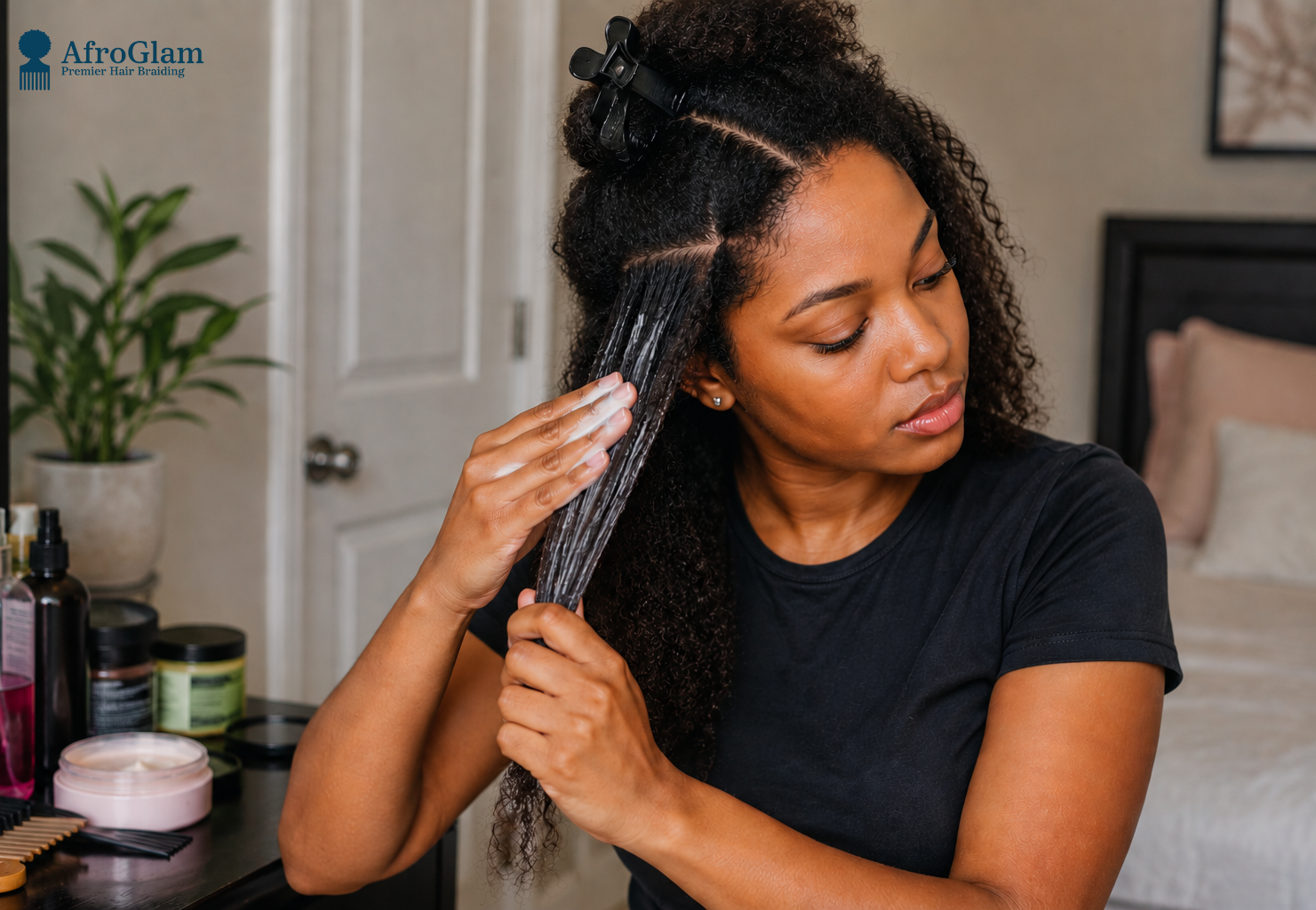
Your Go-To Guide for Getting Your Hair Ready Before a Braiding Appointment
Preparing for a braiding appointment involves more than just showing up with clean hair. The right prep helps create a neater finish, eases scalp tension, and can make your braids last longer. Plus, it protects your natural hair by reducing breakage, buildup, and discomfort during the process.
If you want the best results from styles like knotless braids, box braids, or cornrows, having a good pre-braid routine is key. In this guide, you’ll learn exactly how to cleanse, condition, detangle, stretch, and moisturize your hair before your appointment. We’ll also cover common mistakes to avoid and what to do the day before you sit in the chair.
Healthy braiding starts with a healthy foundation. That’s why many stylists now focus on scalp care, moisture balance, and gentle handling before styling. It’s also why high-quality protective styling is often discussed along with hair-health advice from groups like the American Academy of Dermatology and the National Institute of Child Health and Human Development, especially when tension or scalp irritation is a concern.
Why Pre-Braid Preparation Matters
Better Style Results and Cleaner Parts
When your hair is prepped right, your stylist can part more precisely, grip the hair evenly, and create a polished look from the first row to the last. This is especially crucial for detailed styles like cornrows, boho, boho braids, and gypsy braids, where neatness is everything. Clean, stretched hair also makes the braiding process quicker and more comfortable for both you and your stylist.
Less Breakage and Scalp Stress
Dry tangles and product buildup can cause snagging during installation. This tugging might lead to unnecessary breakage, especially if your hair is dry or prone to knots. Proper prep reduces friction, supports elasticity, and prevents strain that can make protective styles feel anything but protective.
Longer-Lasting Braids with Less Frizz
A clean, moisturized, and well-detangled base often means your braids hold their shape better over time. Braids can start frizzing early when the hair underneath is rough or overloaded with product. If you want a style that stays fresh longer, think of prep as part of the service, not a separate chore.
What to Do 24 to 48 Hours Before Your Appointment
Clarify Your Hair and Scalp
One of the best things you can do before braiding is to wash your hair with a gentle clarifying shampoo. This removes oils, buildup, sweat, and lingering styling products that could make your scalp itch once the braids are in. Many people are surprised by how much cleaner their scalp feels after a true cleansing, and that comfort can make a big difference during a long braid session.
A practical rule many stylists follow is to wash the hair 24 to 48 hours before the appointment. This timing gives your scalp a little time to rebalance and allows your natural oils to return slightly, improving grip and reducing slipperiness. For clients who prefer a full-service experience, booking a hair wash before styling can save time and make the entire appointment smoother.
Deep Condition for Moisture and Flexibility
After cleansing, apply a deep conditioner to replenish moisture and improve flexibility. Hair that is dry or brittle is more likely to snap under tension, while conditioned hair can usually handle braiding more comfortably. This step is especially useful for curly, coily, and high-porosity hair that tends to lose moisture quickly.
Recent hair-care trends have placed more attention on scalp and strand health, including lightweight conditioners, scalp scrubs, and exfoliating brushes. That shift reflects a broader understanding that styles last longer when the scalp is healthy and the hair is hydrated. If your hair tends to be dry, pair conditioning with your broader routine from Moisture Tips for Curly and Coily Hair and the advice in Building a Simple Natural Hair Routine That Actually Works.
Detangle Gently from Ends to Roots
Thorough detangling is one of the most important parts of pre-braid prep. Start with damp or conditioned hair, divide it into manageable sections, and use a wide-tooth comb or detangling brush from the ends upward. This reduces unnecessary pulling and helps you identify knots before they become a problem in the chair.
Clients who skip this step often end up with longer appointments, more discomfort, and extra tension on the scalp. A thorough detangle session can make a huge difference for styles like kinky twists or regular twists, where smooth sections help create clean partings and uniform tension.
How to Moisturize Without Making Hair Too Slippery
Use a Lightweight Leave-In Conditioner
Moisture is essential, but too much product can work against you. After washing and conditioning, apply a leave-in conditioner or light moisturizer to the mid-lengths and ends of the hair. This supports softness and elasticity while avoiding the heavy residue that can make hair hard to grip. The goal is hydrated hair, not coated hair.
Seal with a Small Amount of Oil
Once your leave-in is absorbed, use a light oil such as argan, jojoba, or another natural option to seal in moisture. A small amount is enough. Over-oiling the scalp can make the hair slippery, which may affect braid neatness and retention. This is a common mistake, especially for clients trying to “help” their stylist by adding as much product as possible.
Hair and scalp experts often stress moderation because buildup can interfere with both comfort and longevity. The FDA also notes that hair and cosmetic products should be used according to label directions, which is a useful reminder that more product is not always better. For anyone with a sensitive scalp, it is smart to keep oils minimal and focus on consistency rather than heavy application.
Focus on Problem Areas, Not the Entire Head
If your hair is especially dry at the ends or around the perimeter, pay extra attention there rather than saturating every strand. Hair porosity matters here: high-porosity hair may need more targeted moisture, while low-porosity hair may do better with lightweight products that absorb easily. The more you understand your hair’s behavior, the easier it becomes to choose the right prep routine before braids.
Stretching Your Hair for Easier Braiding
Why Stretched Hair Improves Results
Stretching helps reduce shrinkage, creates a smoother surface for parting, and can make installation faster. It is especially useful if you are getting styles that rely on neat sections, such as cornrows for a wig, sew-ins, or a sleek, extended ponytail. Stretched hair also helps your stylist gauge length more accurately and avoid excessive pulling to separate tight coils.
Safe Stretching Methods to Consider
There are several ways to stretch hair without relying on heavy heat. Banding, African threading, and low-tension blow-drying are all common options. If heat is used, it should be on a controlled setting and applied carefully to avoid dryness or damage. The best method is the one that gives your hair enough elongation without compromising its strength.
If you already have a heat-related routine, review your habits before your appointment. Our Heat Styling and Natural Hair Damage Prevention guide explains how to reduce risk while keeping the hair manageable. The more gently you stretch your hair, the easier it is for the stylist to work without creating unnecessary tension.
When to Avoid Over-Stretching
Over-stretched or over-manipulated hair can become fragile, especially if it has already been brushed, pressed, or detangled too aggressively. The goal is balance. Hair should be elongated enough to section cleanly, but still soft and resilient enough to hold up during braiding.
Scalp Care Before Braids
Start with a Clean, Comfortable Scalp
Scalp health is a major part of braid prep, not an afterthought. A clean scalp helps reduce itching, flaking, and odor once the braids are in. If you struggle with buildup, use a clarifying wash and consider a light exfoliation session before your appointment so the scalp is fresh and ready.
This is one reason scalp-focused hair care has become such a strong trend in protective styling. Clean parts, healthy follicles, and balanced moisture can support comfort while wearing styles for weeks at a time. For more on this topic, see our Essential Scalp Care for Protective Styles article and the Simple Tips for a Healthier Scalp and Hair Growth in Houston guide.
Use Oil Sparingly and Strategically
A little scalp oil can be helpful if your skin is naturally dry, but too much can attract lint and lead to buildup. Apply only a light amount if needed, and avoid layering oils on top of heavy creams right before installation. This is especially important if you plan to keep your style in for several weeks, because excess product can lead to itching and make refreshing the scalp harder later.
Know When to Pause and Consult a Professional
If your scalp is inflamed, sore, broken, or extremely irritated, it is better to delay styling and address the issue first. Protective styles should protect the hair, not worsen a scalp condition. If you have persistent tenderness or chronic shedding, a salon professional or medical provider may be able to help you decide whether braiding is the right next step.
How to Choose the Right Braiding Style for Your Prep Routine
Match Prep to Your Chosen Style
Not every braid style requires the same amount of prep. Smaller styles often require more detangling and careful sectioning, while larger styles may be more forgiving. For example, box braids and kids box braids usually benefit from a fully detangled, stretched base, while cornrows or kids cornrows braids call for extra attention to scalp cleanliness and precise sectioning.
Consider Knotless and Low-Tension Trends
One of the biggest braid trends in recent years has been knotless braids, which offer a lighter, more natural-looking finish. Because the style begins more gently at the root, many clients find it more comfortable and easier on the scalp. If you are exploring a style that balances beauty with comfort, our knotless braids service may be an excellent fit.
Style choice also affects how you should prepare. A low-tension style still requires clean, hydrated, and detangled hair, but it may be more forgiving for clients who are sensitive to pulling. That makes preparation even more important because the better your foundation, the better your final result will look and feel.
Think About Maintenance Before You Book
Preparation does not stop once the braids are in. It's helpful to think ahead about maintenance, touch-ups, and removal. Styles that last longer often require more disciplined care, while intricate designs may need periodic refreshing. If you know you will want a tidy look for longer, consider pairing your new style with a future touch-up braids appointment or planning a gentle take-down when the time comes.
Common Mistakes to Avoid Before Braiding
Showing Up with Heavy Product Buildup
One of the most common mistakes is arriving with too much grease, cream, or gel in the hair. Heavy buildup can make parting difficult, create flaking under the braids, and prevent the style from sitting cleanly. It can also make the scalp feel sticky and uncomfortable after installation, which is the opposite of what you want from a protective style.
Leaving Knots and Shed Hair in the Strands
Another common issue is assuming the stylist can detangle everything during the appointment. While a professional can help, arriving with severe knots adds time and stress to the process. Detangling at home first makes the entire experience smoother and helps the stylist focus on creating the style rather than working through preventable tangles.
Braiding Hair That Is Too Wet or Too Dry
Hair that is soaking wet can swell, shrink unpredictably, and make sections hard to control. Extremely dry hair can be brittle and prone to snapping. The ideal state is clean, conditioned, detangled, and mostly dry or properly stretched. That middle ground gives the braider the best working surface and helps preserve your hair’s integrity.
What to Bring and Ask During Your Appointment
Bring Approved Products Only If Requested
Some stylists prefer to use their own products, while others may ask you to bring a few specific items. If that is the case, keep things simple: a light leave-in, a small oil, and any hair accessories the salon requests. Avoid bringing several different creams or edge products unless your stylist asks for them, because too many formulas can interfere with the style process.
Ask About Tension, Parts, and Maintenance
Before the braiding begins, ask questions about part size, tension level, and how to care for the style after installation. This is especially helpful if you are trying a new look or if you have a sensitive scalp. Clear communication helps ensure the style fits your comfort level and your hair goals.
It can also help to ask what maintenance products are recommended between appointments. Salons that understand hair prep often retail or suggest home-care items to support healthy wear, which is one reason many clients benefit from visiting a trusted braiding salon and beauty salon rather than guessing on their own.
Plan for Installation Time
Depending on the style, braid length, and hair density, your appointment may take several hours. Come rested, hydrated, and prepared to sit comfortably. Clients who plan usually have a better overall experience and are more likely to leave satisfied with the result.
Real-World Examples of Better Preparation
A Client with Dry Hair and Constant Frizz
Consider a client who regularly wore braids but complained that they frizzed after only a week. After changing her routine, she began washing 24 hours before her appointment, deep conditioning, detangling in sections, and using only a light leave-in with a minimal amount of oil. The difference was noticeable: her braids looked neater, felt lighter, and stayed fresher much longer.
A Busy Parent Preparing a Child for Braids
Parents often find that a little planning saves a lot of stress. For children, especially, hair that is freshly washed, detangled, and stretched can make the appointment shorter and less frustrating. Styles like kids' box braids are much easier to install when the child’s hair has already been prepared carefully at home.
A Salon Workflow That Improves Client Satisfaction
Salons that educate clients on prep often see better results, smoother appointments, and happier returns. When clients arrive ready, stylists can spend more time on precision and style quality. That is why professional education matters so much in the braiding industry and why preparation is now part of the broader conversation about healthy protective styling.
When to Seek Professional Help Before Braiding
If Your Hair Has Heavy Buildup or Prior Damage
If your hair has not been washed properly in a long time, or if you are dealing with product overload, breakage, or matting, professional support may be the safest option. A salon-provided cleansing and detangling session can reset the hair and reduce stress before installation. This is particularly helpful for clients transitioning from other styles such as extensions or sew-ins.
If You Are Removing Old Styles First
Before new braids, it is important to remove old extensions and cleanse the hair thoroughly. A safe, gentle hair extension take-down process helps avoid extra breakage and gives your natural hair a better starting point. After removal, a wash, condition, and detangle session can prepare the hair for the next style.
If You Need Help with a Healthy Transition
Some clients are not sure which protective style is best, how long they should keep it in, or how much manipulation their hair can tolerate. In those cases, a stylist can recommend a prep routine based on your hair texture, density, and goals. If you want a style that keeps the hair neat and accessible, cornrows for a wig or a simple protective pattern may be a better fit than a more intricate design.
Final Tips for a Smooth Braiding Day
Prepare the Night Before
Pack your essentials, confirm your appointment, and make sure your hair is fully dry and ready. The night before is also a good time to recheck your detangled sections and make sure you are not bringing product buildup into the appointment. A calm, organized start can make the whole day easier.
Think About Aftercare Now, Not Later
Great prep supports great aftercare. When your hair is clean, moisturized, and stretched properly before braiding, you are already setting yourself up for a style that is easier to maintain. If you want to keep your look fresh, plan for nighttime wrapping, scalp care, and gentle cleansing while the braids are installed.
Work with an Experienced Stylist
Preparation is important, but so is the skill of the stylist. An experienced braider understands how to balance tension, create clean parts, and protect the natural hair underneath. At AfroGlam Hair Braiding, we understand that the best results start before the first braid is even placed, which is why education, consultation, and careful styling all matter.
If you are ready to book your next style or need help choosing the right prep steps for your hair type, contact AfroGlam Hair Braiding at (346) 430-9350 or visit us at 12222 Bissonnet St, Suite L, Houston, TX 77099. Whether you are planning free style, a classic braid look, or a child-friendly service, proper preparation can make all the difference in how your hair looks, feels, and lasts.
Ready for your best braiding appointment yet? Start with a clean scalp, moisturized strands, and a plan that supports your hair goals. Then book your appointment with confidence and enjoy a style that is beautiful, comfortable, and built to last.