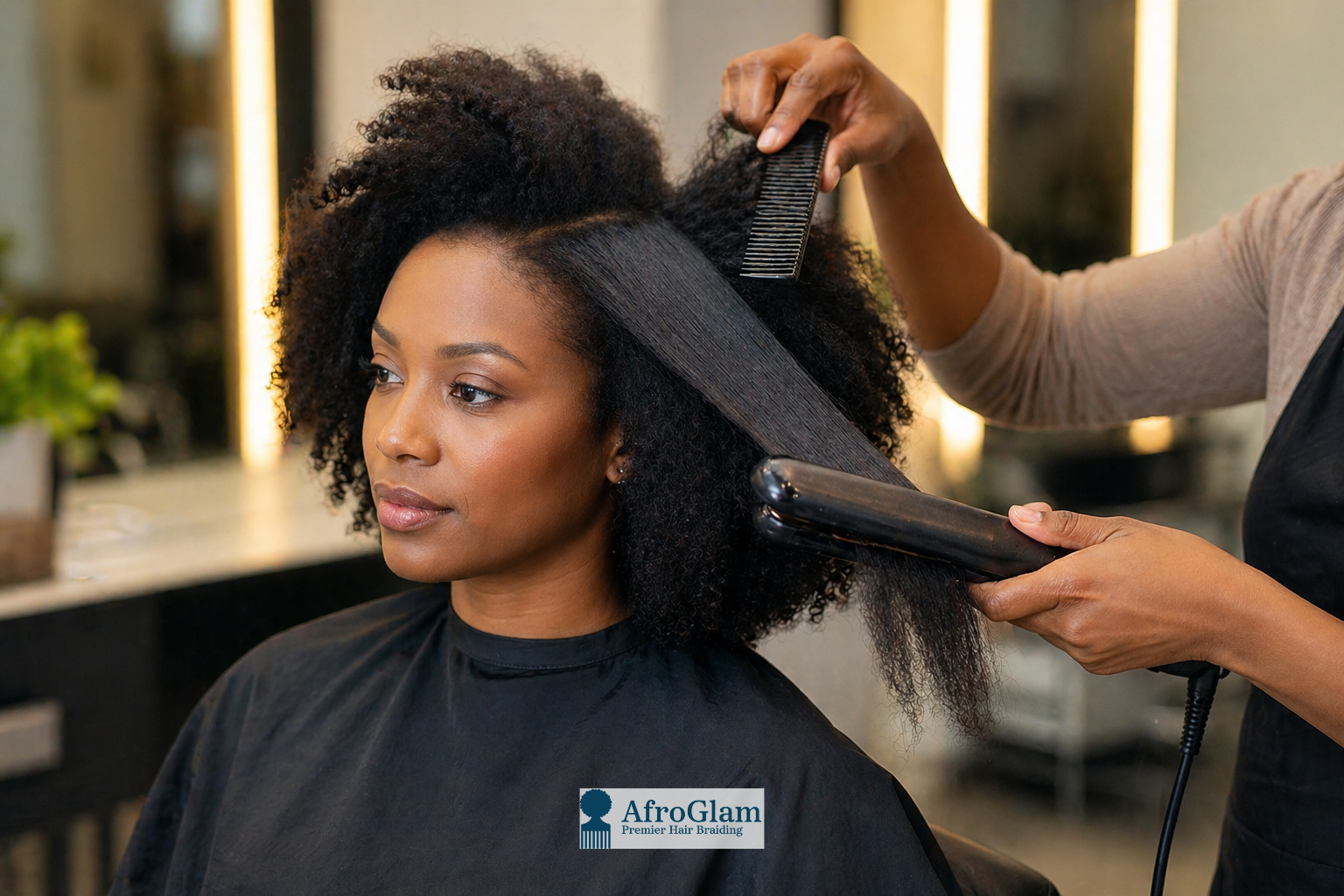
Heat styling can give you sleek blowouts, defined curls, and polished looks, but it can also stress your natural hair. When styling tools are too hot, used too often, or applied without protection, you might end up with dryness, breakage, and a loss of elasticity. But here’s the good news: heat damage isn’t unavoidable. With the right products, smarter habits, and consistent care, you can enjoy styling flexibility while keeping your hair healthy. In this guide, we’ll break down how heat affects natural hair and share the best ways to minimize damage, including salon-quality care options like a deep cleansing hair wash and refreshing touch-up braids when you want to avoid constant heat use.
Natural hair is particularly vulnerable to high temperatures because of its structure. Curly and coily strands usually have more bends, twists, and raised cuticles, which can make it harder to retain moisture. Heat can make these challenges worse by stripping water from the hair shaft and weakening the outer layer that protects each strand. So, heat styling should always be a deliberate process, not a daily shortcut. For healthier long-term results, combine styling choices with moisture care, protective styling, and smart temperature control. If you're looking for more on hydration, check out our guide to moisture tips for curly and coily hair.
Recent research and expert advice keep coming back to a simple message: less heat, lower temperatures, and better preparation lead to healthier hair. Hair care pros increasingly suggest using heat protectant sprays and tools with adjustable temperature settings because they let you customize styling based on your hair type. In humid places, hair can become more prone to frizz and repeated re-styling, which is why many people in Houston opt for styles that cut down on the need for frequent heat. A balanced routine can include salon services, heatless options, and occasional styled looks that don’t harm your hair’s integrity.
How Heat Styling Affects Natural Hair
Moisture Loss and Dryness
One of the first things heat styling does is cause moisture loss. Hair naturally contains water, and when you use flat irons, blow dryers, or curling tools, that water evaporates quickly. If the temperature is too high or you repeat the process too often, the strand can become dry and brittle. Over time, dryness makes hair harder to detangle, more likely to snap, and less able to hold its natural pattern. This is why heat protection and deep hydration should always go hand in hand.
Weakening of the Hair Cuticle
The cuticle is the protective outer layer of the hair shaft. Excessive heat can lift, chip, or roughen the cuticle. Once that happens, strands are more vulnerable to friction, tangling, and breakage. Practically speaking, your hair may feel rough, look dull, and lose its healthy bounce. The American Academy of Dermatology suggests reducing the frequency and intensity of heat styling as one of the best ways to protect your hair.
Changes in Curl Pattern and Elasticity
Natural hair can also change texture after repeated heat exposure. Some folks notice looser curls, less definition, or sections that don’t bounce back after washing. That usually signals weakened protein structure and a loss of elasticity. While a single blowout might not cause permanent damage, repeated heat without breaks can change how your hair behaves. If your curls aren’t bouncing back like they used to, it might be time to cut back on heat and focus on recovery.
Current Trends in Heat Styling and Hair Protection
Heat Protectant Sprays Have Become Essential
One of the biggest trends in modern hair care is the rise of heat protectant sprays and serums. These products create a barrier between your hair and the styling tool, reducing moisture loss and friction. Many formulas include silicones, proteins, and nourishing oils that help smooth the hair cuticle before heat is applied. Pros recommend using them every time you use heat, not just for special occasions. For more on current protection methods, check out the Hiranandanithi Hospital overview.
Adjustable Temperature Tools Are Improving Outcomes
Another important development is styling tools with adjustable heat settings. Instead of always using the highest setting, you can choose temperatures that suit your hair’s texture and condition. Fine or damaged hair generally responds better to lower heat, while thicker hair may need a bit more warmth. This customization matters because the goal isn’t to eliminate heat, but to make it safer and more intentional. Tools that display exact temperatures give you more control and help reduce guesswork.
Heatless Styling Is Gaining Popularity
Heatless styling methods are also on the rise because they deliver beautiful results with less risk. Braiding damp hair for waves, using rollers, wrapping styles, and setting curls overnight can create polished looks without daily heat exposure. Many people who switch to heatless routines report better moisture retention and less breakage over time. For those who want style variety without stressing their strands, protective and low-manipulation styles like knotless braids or boho braids are practical alternatives between heat styling sessions.
Best Practices to Minimize Heat Damage
Always Start with Clean, Conditioned Hair
Heat styling on dirty or product-coated hair can lead to uneven results and more tool passes. A clean base helps the heat distribute evenly, reducing the need to press or comb repeatedly. A thorough wash followed by proper conditioning supports moisture retention. If your hair’s prepped for a heat style, a professional hair wash helps create the right foundation.
Use Heat Protectant on Every Section
Apply heat protectant generously and evenly, section by section. A single mist at the top isn’t enough, especially for thick hair. Work the product from root to tip, then let it dry if needed before applying direct heat. The main purpose is to reduce moisture loss and create a buffer against high temperatures. Even when you’re in a hurry, skipping this step is a fast track to damage.
Choose the Lowest Effective Temperature
A common mistake is thinking that more heat equals better results. Actually, the best temperature is the lowest one that gets the job done. Hair pros recommend around 250°F to 300°F for fine or damaged hair, with slightly higher settings up to 375°F for thicker hair. This aligns with recognized guidance and reduces the risk of scorching the hair shaft. If unsure, start low and increase gradually only if needed. The NIAMS offers resources on careful hair handling to reduce stress.
Limit Repeated Passes
One of the biggest causes of heat damage is repeating the same motion on a section of hair. Each extra pass adds stress and dries the strand further. To avoid that, work with small, neatly sectioned hair and make sure each section is detangled before applying heat. Good prep reduces resistance, meaning fewer passes and less friction. Aim for smooth movement in one or two controlled passes rather than dragging the tool across the same spot multiple times.
How Often Is Too Often?
The Recommended Frequency for Heat Styling
Many hair care pros suggest limiting heat styling to about two or three times a week at most, and even less if your hair is fragile, color-treated, or recovering from damage. This gives hair time to recover moisture and reduces stress. If you’re using direct heat more often, your routine might need an update. Often, a better cut, maintenance, or a longer-lasting protective style can reduce the need for frequent styling.
Signs Your Hair Needs a Break
Hair often sends warning signs before serious damage sets in. Watch for excessive dryness, increased tangling, rough texture, split ends, and a noticeable loss of curl pattern. Breakage during detangling or more intense shedding can also indicate stress. When that happens, pause heat styling and focus on moisture, trims, and low-manipulation routines. The Pantene heat damage overview offers a consumer-friendly summary of these warning signs.
Recovery Periods Matter
Just like muscles need recovery after exercise, hair benefits from rest after heat exposure. Recovery periods let you moisturize deeply, trim ends, and restore manageability. This is where protective styling helps, as it maintains a polished look without daily heat. If you need a styling reset, services like cornrows or regular twists support a low-heat routine while still giving you a refined appearance.
Heatless and Low-Heat Alternatives Worth Trying
Protective Styles Reduce Styling Pressure
One of the best ways to reduce heat damage is to reduce how often you need heat. Protective styles can protect your hair ends, reduce manipulation, and help you stretch time between wash-and-style sessions. Styles like crochet braids, box braids, and kinky twists are great for those who want versatility without daily heat exposure. These styles also help preserve length, retain moisture, and simplify maintenance.
Set Styles with Rollers, Braids, or Wraps
Heatless sets can create bounce, curl, and volume with far less risk than direct heat. Roller sets give a polished finish, while braiding damp hair can produce soft waves and natural texture. Silk wraps and satin-covered tools can also improve the final look without extreme temperatures. These methods might take more time, but they’re often worth it because they preserve your hair’s integrity long-term.
Use Salon Services Strategically
Sometimes, avoiding heat damage means planning styles around professional services that support your hair. For instance, if you want a clean, controlled look for an event, you might choose cornrows for wig preparation or a neat extended ponytail instead of relying on daily flat-ironing. If your current style needs refreshing, a touch-up braid service can extend the life of the look and delay the next heat session.
Real-World Example: Recovering Hair After Too Much Heat
What Recovery Can Look Like
Many folks experience heat-related damage gradually and don’t realize it until breakage becomes obvious. A common recovery plan starts with a trim to remove the most compromised ends, followed by deep conditioning and a strict reduction in heat use. Hair that’s lost its elasticity often responds well to a routine focused on moisture, gentle detangling, and low-tension styling. Those who shift to heatless looks for several weeks often notice less shedding, smoother strands, and better curl return.
Why Consistency Matters More Than One Repair Treatment
One deep conditioning session won’t erase repeated heat damage. Consistency restores your hair’s condition over time. That means maintaining a weekly moisture routine, sleeping on satin or silk, and avoiding tight styles that add stress. For some, incorporating protective services and using a salon consultation helps create a realistic plan that fits their lifestyle. If you need more guidance on everyday care, check out our article on building a simple natural hair routine to keep the process manageable.
Houston Climate Considerations
Humidity can make heat styling even trickier because frizz often tempts people to re-flat-iron hair more frequently. In a climate like Houston’s, the key is to cut down on repeated heat and re-styling. That might mean choosing styles that hold up better in moisture-rich weather or planning styles that require less daily touch-up. Houston clients often benefit from salon guidance that balances style, humidity, and long-term hair health rather than chasing a perfectly smooth finish daily.
Expert Tips for Safer Styling
Keep Your Tools Clean and in Good Condition
Dirty styling tools can create uneven heat distribution and drag product residue through the hair. Clean plates and barrels work better and reduce the chance of snagging and unnecessary pulling. Regularly check cords, tool settings, and surfaces so your styling routine is safer and more predictable. Small maintenance habits can make a noticeable difference in the final result quality.
Use Tension, Not Just Heat, to Create Shape
Many styles rely too much on heat when real shaping power comes from sectioning and tension control. Blow-drying with a comb attachment, for example, can stretch the hair with less direct contact than ironing small sections repeatedly. The right technique often matters more than the highest setting. If you’re working with a stylist, ask how they minimize direct heat exposure while still creating a polished finish.
Know When to Choose a Style That Doesn’t Require Heat at All
Not every special occasion needs a blowout. In fact, some of the most elegant styles are also the safest for your hair. Braids, twists, cornrows, and other low-manipulation looks can provide a fresh appearance while preserving your natural texture. For those who want a custom finish, options like free style or gypsy braids offer visual interest without the ongoing strain of heat.
FAQ: Common Questions About Heat Styling and Natural Hair
Can Natural Hair Be Heat Styled Safely?
Yes, natural hair can be safely heat styled when done carefully. The keys are preparation, protection, moderation, and recovery. Safe heat styling means using a protectant, choosing a suitable temperature, limiting repetition, and giving your hair time to rest afterward.
What If My Hair Already Feels Damaged?
If your hair feels dry, rough, or stretched out, it’s best to pause heat styling and focus on repair. Deep conditioning, trimming split ends, and using low-manipulation styles can help. In more severe cases, a professional assessment can help you decide whether to transition temporarily into protective styles while your hair recovers.
Are Heat Protectants Really Necessary?
Yes. Heat protectants aren’t just a marketing gimmick; they’re practical for minimizing damage. They help reduce friction and moisture loss, especially when used correctly and evenly. While they don’t make heat harmless, they lower the risk enough to make them a worthwhile step every time.
Conclusion: Protect Your Hair Without Giving Up Style
Heat styling doesn’t have to harm natural hair. Understanding how heat affects moisture, cuticles, elasticity, and texture can help you make smarter choices that protect your strands while still achieving the look you want. The most effective approach is simple: use heat less often, keep temperatures appropriate, apply protectant every time, and invest in recovery between styles. For more guidance on choosing lower-stress styles, explore our guide to protective styles or schedule a service that supports healthy hair habits.
At AfroGlam Hair Braiding, we believe beautiful hair should also be healthy. Whether you’re looking for braids, twists, maintenance, or styling support, our team is here to help you create a plan that fits your hair goals and lifestyle. Ready to reduce heat damage and give your natural hair the care it deserves? Contact us today at The AfroGlam Hair Braiding or call (346) 430-9350 to book your visit. Healthy hair starts with informed choices, and the right support can make all the difference.