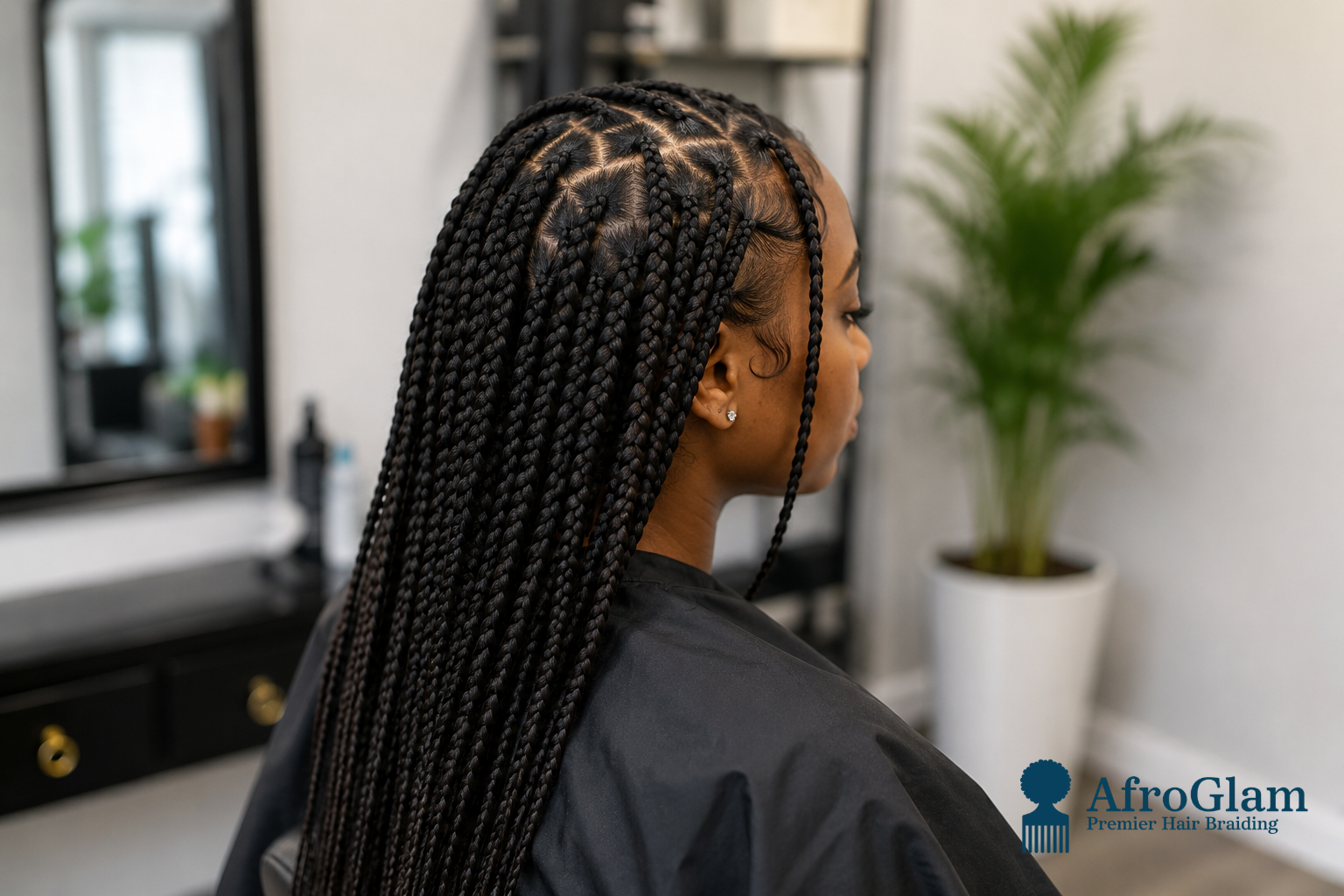
Knotless braids are quickly becoming a top pick for those who want a hairstyle that looks sleek, feels lighter, and is kinder to their hair. At AfroGlam Hair Braiding, we've noticed more people opting for this style because it combines beauty and comfort in a way that many traditional styles don't. If you're thinking about different protective styles, this guide will help you see why knotless braids are so popular and if they're right for you.
If you're considering other options, it might help to compare knotless braids with other popular styles like box braids or boho braids. These styles offer different looks and upkeep needs. The best choice depends on things like your lifestyle, how sensitive your scalp is, and how long you want your braids to last. According to the American Academy of Dermatology, protective styles can be beneficial when installed and cared for properly, especially by keeping tension low and maintaining a healthy scalp: AAD guidance on protective hairstyles.
What Makes Knotless Braids Different?
A braid without the bulky knot
The standout feature of knotless braids is right in the name. Instead of starting with a tight knot at the root, the braid begins with your natural hair and then gradually adds in extensions. This creates a flatter base and a more seamless finish. Many people notice that the braids look more natural at the scalp and move more freely than traditional ones.
This isn't only about looks. Because the braid starts with less tension at the root, the style often feels more comfortable both during and after getting it done. That's a big reason why people searching for a braiding salon and beauty salon in Houston often specifically ask for knotless braids over the usual box braid method. They want style without the pain.
Why the lighter feel matters
A lighter feel can make a big difference for everyday wear. Heavy braids can pull at the scalp, cause headaches, or make you tired after wearing them for a long time, especially if you have finer hair or sensitive edges. Knotless braids cut down on that initial bulk at the root, making the style easier to wear for long periods without constant discomfort.
This lighter feel also matters for people who are active, commute every day, or need a style that can smoothly transition from work to family life without constant adjustment. If you've ever wanted a protective style that looks sleek but doesn't feel stiff, knotless braids often fit the bill. They're also easier to style into ponytails, buns, and half-up looks.
Why Clients Keep Requesting Knotless Braids
Comfort is a top priority.
One of the biggest reasons knotless braids are so popular is comfort. More and more people want styles that protect their hair without feeling like they're enduring something painful. Knotless braids offer a softer, more natural feeling, which is especially appealing for first-time braid clients or anyone who has had a painful experience before.
Comfort matters because it affects how well you enjoy and maintain the style. When a braid is too tight, people may avoid touching their scalp, washing properly, or keeping up with care. A more comfortable braid encourages better maintenance habits, which can help your style last longer and your hair stay healthier. For more on choosing a low-tension option, check out our protective hairstyle guide.
The natural look is highly desirable.
Knotless braids are also requested because they create a smooth, natural appearance. The braid starts small at the top and gradually becomes fuller, giving a more realistic transition from your own hair to the extensions. That subtle look is why many people prefer knotless braids for everyday wear, photos, events, and professional settings.
This natural effect appeals to clients who want a polished style without obvious bulk at the base. It also works well for people who like versatility because the braids can be styled in ways that look elegant, casual, or modern depending on the occasion. In a beauty market where people want both function and aesthetics, knotless braids deliver on both.
They support a protective hair routine.
Protective styling is about more than just looking good. It's about reducing manipulation, helping hair retain moisture, and protecting strands from constant styling stress. Knotless braids fit well into that strategy because they are typically gentler on the scalp and edges than styles that start with a tight knot. This makes them especially appealing for people trying to retain length.
Healthy scalp habits are still essential, though. Even a low-tension style requires proper cleansing, moisturizing, and maintenance. The CDC notes that scalp health is closely connected to overall skin care and irritation management, especially when people use products regularly or wear styles for extended periods: CDC skin and scalp care resources. A good style works best when paired with good care.
How Knotless Braids Benefit Different Hair Goals
Better for people who want less tension
If your scalp is sensitive, knotless braids might be a better option than heavier traditional styles. The reduced tension at the root can help lower the chance of tightness, discomfort, and unnecessary pulling. That's especially helpful for people who have experienced thinning edges or irritation in the past and want a more considerate braid installation.
Remember, "less tension" doesn't mean "no tension." Braids still need to be installed properly, with careful sectioning and thoughtful spacing. A skilled stylist will balance neatness with comfort so that your braids look polished without stressing the hairline. If you're preparing for a salon visit, our braid prep guide can help you arrive ready for a smoother appointment.
Helpful for length retention and breakage reduction
Many clients choose knotless braids because they want to retain length. By limiting daily styling, heat exposure, and friction, a protective style can support healthy growth practices over time. Knotless braids are especially attractive for people who want to wear one style for weeks while minimizing unnecessary manipulation.
That said, length retention depends on more than the style alone. Moisture balance, scalp care, nighttime protection, and timely removal all play a role. Research and professional hair-care guidance consistently emphasize the importance of minimizing traction and handling the hair gently while in protective styles. This is one reason knotless braids have gained credibility among people focused on hair health, not just aesthetics.
Works for many lifestyles and age groups
Another reason knotless braids are requested so often is their flexibility. They work for adults with busy jobs, students with full schedules, parents managing family life, and even kids who need a neat, manageable style. The look can be customized in different lengths, sizes, and finishes to fit the person wearing it.
For younger clients, the comfort factor is especially important. Parents often look for styles that stay neat without feeling overly tight. That's why styles such as kids box braids for ages 5-9 or kids box braids for ages 10-13 are often discussed alongside knotless options when families want style with less stress on the scalp.
What to Expect During a Knotless Braid Appointment
Preparation makes a difference.
A successful braid appointment starts before you sit in the chair. Hair should be clean, detangled, and ready for sectioning. Some clients also benefit from a trim or a wash before installation, especially if they are coming in after wearing another protective style for several weeks. If you're not sure where to start, our hair wash service can help create a cleaner foundation for installation.
Preparation also helps your stylist work more efficiently. The cleaner and more manageable your hair is, the easier it is to create neat sections and a consistent braid pattern. That often leads to a better final result and a more comfortable install process overall.
Installation takes skill and patience.
Knotless braids require careful technique. Because the braid begins with natural hair and transitions into extensions, the stylist must control tension, section size, and the amount of hair fed in at each step. A rushed install can lead to uneven braids or too much pressure at the scalp, which defeats the purpose of choosing knotless in the first place.
That's why clients often prefer an experienced braiding salon and beauty salon rather than trying to cut corners on service quality. A good installation should look smooth, balanced, and secure without feeling harsh. If you're comparing braid-related services, options such as knotless braids, cornrows, and crochet braids all have different strengths depending on your hair goals.
The finish should feel secure, not painful.
There's a common misconception that fresh braids need to feel tight to last. In reality, a properly installed knotless style should feel secure without sharp pain, pulling, or scalp throbbing. You may feel some initial firmness because the style is newly installed, but discomfort should never be extreme. If it is, that's a sign the braid may be too tight.
It's a good idea to speak up during the service if anything feels off. A professional stylist should be willing to adjust their technique to support your comfort. This is one of the biggest reasons knotless braids have developed such strong word-of-mouth popularity: clients tell friends about how good they looked and how much better they felt wearing them.
Knotless Braids vs. Other Popular Protective Styles
Compared with traditional box braids
Traditional box braids are still a classic choice, but knotless braids often win for comfort and appearance. Box braids tend to have more bulk at the root because of the knot used to anchor the extension hair. That structure can be useful for certain looks, but it may feel heavier on the scalp and appear less seamless.
Knotless braids are frequently chosen by clients who want the aesthetic of box braids without the root knot. If you like the idea of a timeless braided style but want something softer at the scalp, the difference may be enough to make knotless your preferred option. For related styling inspiration, our box braids page can help you compare the two approaches more clearly.
Compared with twists and cornrows
Twists and cornrows remain excellent protective styles, and they can be great choices for different goals. Twists may be lighter and quicker to install, while cornrows are ideal for sleek patterns, wig prep, and low-profile styling. Knotless braids, however, often stand out when a client wants a longer-wear style with a natural hanging finish.
That's why many people book regular twists or cornrows for wig preparation for specific needs, then choose knotless braids when they want a fuller, more versatile look. Each style has a purpose, but knotless braids tend to be the most requested when comfort and style need to work together.
Compared with boho and gypsy-inspired looks
Boho and gypsy-inspired braids remain trendy because they offer a soft, flowing finish. Knotless braids often serve as the base for those styles because the root structure is so natural. If you enjoy loose curls, movement, or a more textured final appearance, knotless braids can be customized to create that effect.
Styles like boho braids and gypsy braids are great examples of how versatile knotless-style foundations can be. Many clients love that they can keep the comfort of knotless installation while still enjoying an expressive, fashion-forward finish.
How to Keep Knotless Braids Looking Fresh Longer
Protect your braids at night.
Nighttime care is one of the easiest ways to extend the life of knotless braids. Using a satin bonnet, scarf, or pillowcase helps reduce friction while you sleep, which can keep frizz down and help the style stay neat longer. It also supports moisture retention, which is important for the hair under the braids.
If your braids are longer, wrapping them correctly can also help prevent tangling and flattening. Small daily habits make a big difference over time, especially when you want your style to last several weeks without looking worn out too soon. A little routine at night can save you time in the morning.
Keep the scalp clean and balanced.
Some people assume protective styles mean no washing at all, but that isn't a healthy approach. The scalp still needs cleansing, especially if you use oils, gels, edge control, or styling products. A buildup-free scalp tends to feel more comfortable and supports a cleaner overall look.
You don't need to overwash, but you do need a balanced routine. Use gentle cleansing methods and avoid heavy buildup at the roots. If your style begins to feel itchy or heavy, our itchy scalp guide explains common causes and practical ways to respond without damaging the braids.
Schedule touch-ups when needed
Even the best braid style will eventually show new growth. That doesn't mean the style is failing; it means your hair is growing normally. A touch-up can refresh the front, clean up frizz, and help the style look newer without needing a complete reinstall right away.
Services like touch-up braids can be especially helpful if you want to extend the life of your style while keeping it neat. In some cases, light maintenance is all you need to get a few more polished weeks from your look.
Common Mistakes People Make With Knotless Braids
Choosing the wrong size or length
One mistake is choosing a braid size or length that doesn't match your hair needs or daily routine. Very long braids can look beautiful, but they may also require more maintenance and add more weight. Very small braids can take longer to install and may not be ideal for every hair type or time frame.
The best choice is usually the one that fits your lifestyle. If you work out frequently, have a hands-on job, or don't want to spend much time styling, a medium-length option may be more practical than an extra-long look. Style should work with your life, not against it.
Using too much product
Another common problem is product buildup. Heavy oils, thick gels, and excessive edge control can create residue along the scalp and roots. Over time, that buildup can make the hair feel dirty or itchy even if the braids themselves still look neat.
A lighter routine usually works better. Use only what your scalp and hair truly need, and avoid layering products just because the braids are installed. Simplicity is often the key to keeping knotless braids comfortable and fresh.
Waiting too long to remove the style
People sometimes keep braids in longer than they should because the style still looks decent. However, the longer any protective style stays in, the more care the natural hair underneath may need. New growth, shedding, and product buildup all become more important as time passes.
When it's time to take braids down, do so carefully. If you need help before or after removal, our hair extension takedown service can make the process smoother and reduce unnecessary breakage. Proper removal is just as important as proper installation.
Why Knotless Braids Fit Modern Beauty Trends
They align with low-maintenance beauty.
Modern beauty trends lean heavily toward styles that look good with less daily effort. People want hairstyles that are practical, camera-ready, and versatile enough for different situations. Knotless braids fit that lifestyle perfectly because they combine a refined look with minimal day-to-day styling.
That low-maintenance appeal is a huge reason they continue to grow in popularity. A well-installed style can save time in the morning, reduce heat styling, and make it easier to maintain a polished appearance during a busy week. In a world where people balance work, family, and personal time, convenience matters.
They support individual expression.
Knotless braids are also popular because they can be personalized. Clients can choose different lengths, thicknesses, colors, and finishes to match their personality. Some prefer a classic, clean look, while others want more movement, curls, or creative parting patterns.
For clients who want something especially unique, our free style option allows more room for creative expression. That flexibility is one reason knotless braids stay relevant across seasons and trends: they can be classic, trendy, understated, or bold depending on how they are designed.
Frequently Asked Questions About Knotless Braids
How long do knotless braids usually last?
Most knotless braids last several weeks when installed properly and cared for consistently. Longevity depends on braid size, your hair type, your routine, and how much activity you have during wear. Keeping the scalp clean and sleeping with protection at night usually helps the style hold up longer.
Are knotless braids better for natural hair?
They can be a better fit for many natural hair clients because they often place less tension on the scalp. That makes them appealing for people who want a protective style that feels gentler. Still, the right choice depends on your hair condition, goals, and how the style is installed.
Can knotless braids work for children?
Yes, they can, as long as the style is sized and installed appropriately for the child’s comfort. Many parents choose lighter, lower-tension braid options for younger clients. A professional stylist should always prioritize comfort, patience, and age-appropriate styling choices.
What if my scalp feels sore after installation?
Some mild tightness can happen on the first day, but soreness that lasts or worsens is not normal. If the discomfort is sharp, persistent, or concentrated around the hairline, it may be too tight. In that case, you should contact your stylist promptly so the issue can be addressed before damage occurs.
Conclusion: Why Knotless Braids Remain a Client Favorite
Knotless braids have become one of the most requested styles because they answer several real needs at once: comfort, beauty, versatility, and better support for healthy hair habits. They look natural, feel lighter, and can be customized for different lifestyles and personal preferences. For many clients, that combination is exactly what they have been searching for.
If you're ready to explore knotless braids or compare them with other protective styles, AfroGlam Hair Braiding is here to help you choose a look that fits your goals. Whether you want a classic finish, a soft boho-inspired appearance, or a style that protects your hair while keeping you confident, our team is ready to deliver expert care. Learn more about our services, browse your options, and book your next appointment with a trusted Houston hair braiding salon today. You can also call (346) 430-9350 or visit us at 12222 Bissonnet St Suite L, Houston, TX 77099, USA to get started.