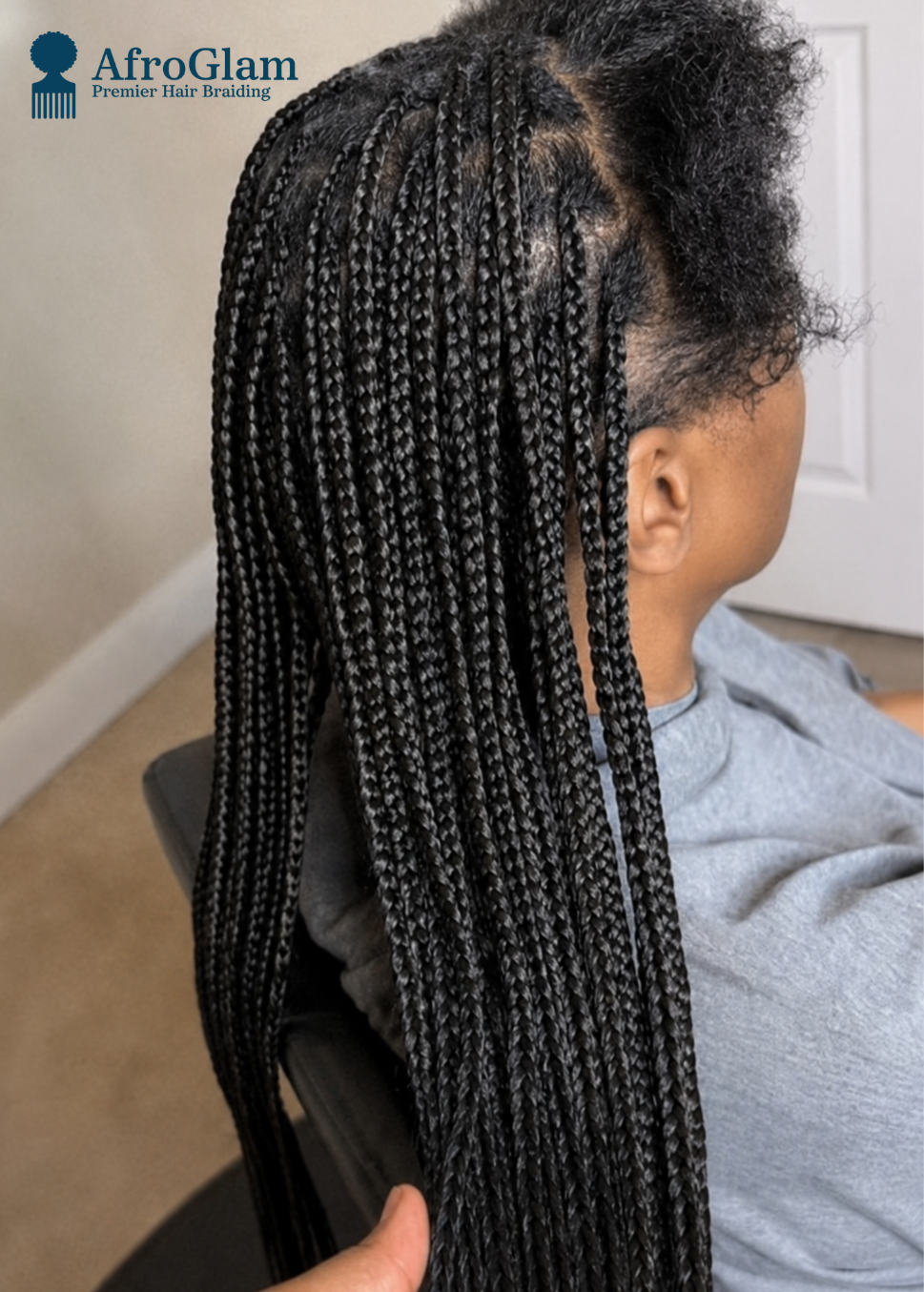
Your Go-To Guide for Keeping Braids Fresh with Touch-Ups
Fresh braids can totally transform your look. But even the most perfect style needs a little TLC to keep it looking great. Over time, new hair growth, frizz, and everyday wear can make braids look older. That's where braid touch-ups come in, giving you a way to keep your hairstyle looking fresh without starting from scratch.
If you're looking to keep your hairstyle investment intact, touch-ups are a smart move. They help you keep that polished look, reduce tension on your hair, and keep your parts looking neat for longer. Services like touch-up braids and touch-up locs can make all the difference between a style that lasts and one that quickly looks worn out.
In this guide, we'll dive into what braid touch-ups are, why they're important, when to get them, and how they help keep your hair healthy. Plus, we'll share maintenance tips, signs that your style needs a little love, and how to pick the best touch-up plan for your hair goals.
What Are Braid Touch-Ups?
The Basics of Touch-Up Maintenance
Braid touch-ups are targeted maintenance sessions that refresh specific parts of your hairstyle instead of redoing the whole thing. They usually focus on edges, parts, or sections where new growth is visible. This lets you keep the overall style while fixing the areas that show wear the fastest.
Think of touch-ups as a reset button for parts of your style that are starting to look tired. Instead of waiting until your braids look completely grown out, a touch-up brings back that neatness and balance. This is especially handy for styles like box braids, knotless braids, and cornrows, which can look great much longer with proper upkeep.
How Touch-Ups Differ from a Full Reinstall
A full reinstall involves taking down the entire style and starting over. That's necessary when the braids are too old, or the parts are uneven. Touch-ups, on the other hand, are more focused and quicker because they only fix specific problem areas.
This makes a big difference for both cost and convenience. A full reinstall might be best after several weeks or when buildup becomes an issue, but touch-ups help you keep the style going before that point. If you're juggling a busy schedule, touch-ups can save you time while keeping your hair looking fresh.
Why Braid Touch-Ups Extend the Life of Your Hairstyle
They Refresh Parts and New Growth
The first thing people usually notice about aging braids is new growth. As your hair grows, the base of each braid starts to loosen, and the scalp line becomes more visible. Touch-ups fix this by rebraiding the most noticeable sections so the style looks tighter and more polished again.
This matters because neat parts are a key part of what makes braids look fresh. Even if the ends are still in good shape, grown-out roots can make the whole style feel messy. By focusing on those root areas, touch-ups help your hair keep its structure and visual appeal longer.
They Reduce the Need for Early Takedown
Many people take out their braids too early, thinking the whole style is beyond saving. In reality, the problem might only be in a few sections. Touch-ups let you tackle that problem before it spreads through the entire look.
Plus, less frequent takedowns mean less handling of your natural hair. This can support less breakage and shedding when the style is removed. For more guidance on reducing breakage and supporting healthier hair, check out the NIAMS hair loss resource.
They Help Keep the Original Style Shape
As braids age, the shape of the style can change. The front may puff up, the sides might frizz, and the crown can flatten. A touch-up brings back balance so the hairstyle keeps the same shape you loved when it was first done.
This is especially important for styles with a precise pattern or a sleek finish. Clients who choose cornrows for wig preparation or sew-in installs often rely on maintenance to keep the base neat and supportive. Keeping the foundation clean makes the entire style perform better and last longer.
The Best Times to Schedule a Touch-Up
Watch for Visible New Growth
The clearest sign you need a touch-up is visible growth at the roots. When the base of the braid starts to separate from the scalp or look less secure, it's time to refresh the style. This doesn't always mean the hairstyle is failing, but it does mean the maintenance window has opened.
For many clients, a touch-up every few weeks keeps things looking polished. The exact timing depends on the braid size, your hair texture, how fast your hair grows, and how active you are. People who exercise often or sweat a lot may notice their styles need maintenance sooner.
Pay Attention to Frizz and Loose Strands
Frizz is normal, but excessive frizz can make a style look old quickly. When loose strands begin to take over the braid pattern, the hairstyle loses definition and starts to look unkempt. Touch-ups can smooth this out by reworking selected sections and restoring a cleaner finish.
There's a difference between normal wear and neglect. A little frizz is expected, but once the style starts to tangle or puff unevenly, it's usually better to address it sooner rather than later. This is especially true for detailed options like kinky twists and regular twists, where uniformity is a big part of the final look.
Don't Wait Until Buildup Becomes Severe
Product buildup, sweat, and natural oils can collect around the scalp over time. If buildup gets too heavy, it can make the hair feel stiff, itchy, or dull. Touch-ups are most effective when used before buildup turns into a deeper cleansing problem.
For scalp comfort, it's helpful to pair maintenance with good washing habits and proper aftercare. The American Academy of Dermatology offers tips on scalp and hair care through its hair and scalp care guidance, which can help you better understand what healthy maintenance should look like between appointments.
What Happens During a Professional Touch-Up
A Careful Assessment of the Existing Style
A good touch-up starts with an evaluation. The stylist checks which areas need refreshing, whether the parts are still aligned, and if any sections should be left alone to avoid unnecessary stress. This step is important because not every braid needs attention at the same time.
Professional assessment also helps prevent over-manipulation. Reworking too much of a style too often can cause tension, thinning, or uneven blending. An experienced braider knows how to refresh the look while protecting the integrity of the hair underneath.
Targeted Rebraiding or Re-Twisting
Once the problem areas are identified, the stylist rebraids or retwists the sections that need the most attention. This might include the front hairline, the nape, the crown, or individual braids that have loosened faster than the rest. The goal is to restore uniformity without disturbing healthy sections.
This method is efficient because it focuses effort where it matters most. Clients who use kids cornrow braids or kids box braids often appreciate touch-ups because they help styles stay neat for school, events, and everyday play without a full redo.
Finishing Touches That Improve Longevity
After the rebraiding work is done, the stylist may smooth flyaways, trim stray ends, and recommend a light product routine. These finishing steps improve both the look and durability of the style. The right finish can make your braids last noticeably longer.
It's also a good time to discuss edge care, nighttime protection, and whether your current style is still the right fit for your hair goals. A strong touch-up appointment should leave you with more than a neat look; it should leave you with a better plan for keeping it that way.
How Touch-Ups Support Hair Health
They Can Reduce Tension When Done Properly
One of the biggest benefits of touch-up maintenance is that it can prevent overgrown styles from being tightened too aggressively later. When people wait too long, they may be tempted to pull braids too tight just to restore the look. That can create unnecessary stress on the scalp and hairline.
According to the CDC’s occupational skin and hair care resources, healthy routines and avoiding repeated irritation are important for long-term scalp comfort. While braids are not a workplace issue in the same way, the principle still applies: reducing repeated strain helps protect the skin and hair over time.
They Help You Manage Shedding More Effectively
All hair sheds naturally, and that's especially visible when styles stay in for several weeks. A touch-up appointment gives a professional a chance to spot areas where shedding may be affecting the braid structure. That can help you decide whether to refresh, cleanse, or remove the style.
By staying ahead of shedding, you can avoid the frustration of loose braids that no longer lie flat. This is useful for styles like crochet braids and boho braids, where texture and fullness matter a lot. A clean refresh often makes the whole style feel revived.
They Encourage Healthier Maintenance Habits
When you schedule touch-ups, you're more likely to stay consistent with washing, moisturizing, and nighttime protection. That consistency is often what makes the biggest difference in hair retention. A stylish braid install is only part of the equation; the routine you follow afterward determines how long it truly lasts.
Touch-up appointments can also reveal whether your current style is helping or hurting your hair. If the braids are causing discomfort or your scalp seems sensitive, you might need a lower-tension option like cornrows, boho, or gypsy braids, offering style variety with a fresh finish.
Home Care Between Touch-Ups
Keep Your Scalp Clean Without Overdoing It
Washing braids properly is one of the best ways to keep them fresh between appointments. A clean scalp helps reduce odor, buildup, and itchiness, all of which can make a style feel older than it is. However, over-washing or using harsh products can also create dryness.
The key is balance. Use gentle cleansing methods, dry the roots thoroughly, and avoid leaving the scalp damp for long periods. If you want more support before or after installation, a professional hair wash can create the right foundation for longer-lasting braids and easier maintenance.
Protect the Style at Night
Nighttime care is one of the simplest ways to extend the life of braids. A satin bonnet, scarf, or pillowcase reduces friction and helps prevent frizz. This small habit can help keep your style neat much longer than sleeping uncovered.
If you're wearing longer styles or ponytail-based looks, this matters even more. Styles like extended ponytails need protection to keep the base smooth and the ends from tangling. Good nighttime habits can make a visible difference in how fresh your hair looks week after week.
Use Products Sparingly and Strategically
Too much product can weigh braids down, attract buildup, and make the scalp feel greasy. Touch-ups work best with a simple routine that keeps moisture in the hair without saturating it. Lightweight oils or scalp-friendly sprays are often better than heavy creams.
If you're unsure which products are best for your texture and style, ask your stylist during the touch-up appointment. Customized guidance is often the safest route because different hair types and braid styles have different needs. A one-size-fits-all product routine rarely gives the best results.
Signs You Need More Than a Touch-Up
When Frizz Becomes Matting
Touch-ups are helpful, but they can't solve every issue forever. If your braids are starting to mat together, tangle deeply, or lose their shape completely, a full reinstall may be the healthier choice. Trying to force a touch-up in that condition can lead to more stress than benefit.
Matting usually means the style has passed its ideal maintenance stage. At that point, removing the braids carefully may be the better option so your natural hair can recover properly. If you need help after takedown, a professional hair extensions takedown service can reduce unnecessary pulling and protect your strands during removal.
When the Scalp Feels Sore or Irritated
Discomfort is never something to ignore. If your scalp hurts, feels inflamed, or stays itchy despite good care, the style may need to come out. Touch-ups should improve comfort, not create more tension or irritation.
Persistent soreness can sometimes mean the braids are too tight or have been kept in too long. In that case, a professional evaluation is more valuable than a simple refresh. Your hair health should always come before extending a style by a few extra days or weeks.
When the Style No Longer Matches Your Needs
Sometimes a style simply stops fitting your life. Maybe you need something easier for work, exercise, or travel. Or perhaps you're ready for a different look altogether. In those moments, the best maintenance decision may be to transition into a new style instead of extending the old one.
That could mean switching from braids to a wig base, transitioning to a low-maintenance design, or choosing a fresh set of cornrows for a clean new look. The point is not to keep a style forever, but to keep it healthy and appropriate for your current routine.
Touch-Up Strategies for Different Braid Styles
Protective Styles with Visible Roots
Styles with a defined braid base usually show growth at the roots first. These include box braids, knotless braids, and cornrow-based looks. For these styles, touch-ups typically focus on the perimeter and the frontmost visible sections.
Clients often notice that refreshing the front alone can improve the entire look. That's why selective upkeep is so valuable. With the right attention, a style can look newly installed even when only a few sections were actually redone.
Twists and Textured Styles
Twists often need a different touch-up approach because the structure is softer and more flexible. Re-twisting can help preserve the twist pattern without making the style feel stiff. This works especially well for regular twists and kinky twists, where shape and definition are central to the final appearance.
Because twists can unravel more visibly at the ends, maintenance should focus on both the roots and the loose sections. A skilled braider knows how to keep the style from looking overworked while still restoring the polished texture that made you choose it in the first place.
Special Occasion and Custom Looks
Custom styles may need more frequent touch-ups if they are designed for a specific event, photo session, or season. A detailed look can lose impact quickly if small sections start to frizz or separate. That's why planning matters for special occasions.
If your hairstyle is meant to be personalized, a service like free style can be paired with maintenance planning so the look stays sharp for as long as you need it. The same idea applies to statement styles like boho braids, where maintaining a chic, flowing finish is part of the appeal.
Frequently Asked Questions About Braid Touch-Ups
How Often Should I Get a Touch-Up?
Most people benefit from a touch-up every two to four weeks, depending on style, growth rate, and daily activity. Smaller or more detailed styles may need earlier attention, while larger styles may hold up longer. The best schedule is the one that keeps your hair neat without causing tension.
Can Touch-Ups Make My Braids Last Longer Than a Full Install Alone?
Yes. Touch-ups can extend the wearable life of your hairstyle by refreshing the areas that age first. They don't replace full maintenance forever, but they can buy you extra time and help you get more value from the original install.
Are Touch-Ups Safe for Children's Styles?
They can be, as long as the style is handled gently and the child is comfortable. Many parents use touch-ups to keep styles neat for school and family events. For younger clients, services like kids box braids and kids cornrows braids are often maintained with a lighter touch to protect sensitive scalps.
Do Touch-Ups Work for Locs Too?
Yes, similar maintenance principles apply to locs. A professional loc touch-up can help keep roots tidy and improve the overall appearance of the style. The goal is the same: preserve the look while protecting the hair underneath.
Conclusion: The Smart Way to Keep Braids Fresh
Braid touch-ups are one of the best ways to extend the life of your hairstyle without sacrificing neatness or comfort. They refresh new growth, reduce the need for a full reinstall, and help your braids stay polished for longer. When paired with proper home care, they can also support better scalp comfort and healthier hair habits over time.
If you want your style to last longer and look better between appointments, plan your touch-ups before the braids start to break down. That simple habit can save time, reduce stress, and help you enjoy your hairstyle with confidence. For clients who want professional support and a polished finish, AfroGlam Hair Braiding is here to help with thoughtful maintenance, skilled styling, and service built around your hair goals.
Ready to keep your braids looking fresh? Book your next maintenance visit, explore our protective style options, and make your hairstyle last the smart way.