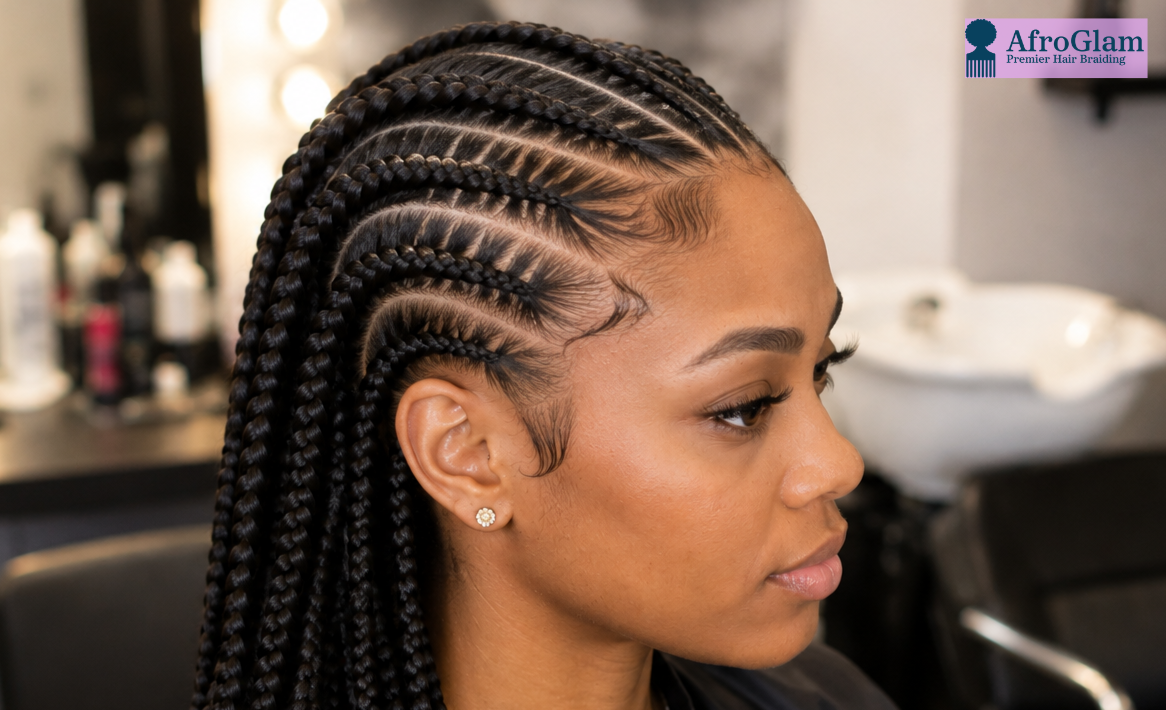
The Real Deal with Protective Hairstyles and Healthy Hair
Protective hairstyles aren't just about looking good; they're a smart way to keep your textured, coily, and curly hair healthy. When done right, these styles cut down on daily fuss, shield your hair from the elements and friction, and help it grow by reducing breakage. For many, this means less scalp stress, more predictable hair routines, and stylish looks that work hard behind the scenes.
At AfroGlam Hair Braiding, we see this every day in our salon. Whether you're trying out knotless braids, going for a stylish boho braids look, or just want a low-maintenance style, the goal is always the same: protect your hair while helping it thrive. In this guide, we'll explore why protective hairstyles matter, the trending styles for 2026, how to choose the best one for you, and how to care for your hair with styles like braids and twists.
If you're curious about the science of hair health, the American Academy of Dermatology notes that hair breakage and loss can be affected by styling habits, tension, and scalp care. Check out their insights here. The main thing to remember: the right protective style supports healthier hair, but only if tension, upkeep, and timing are managed well.
What Really Makes a Hairstyle Protective?
It's About Reducing Stress, Not Just a New Look
A hairstyle is "protective" when it reduces the stress your hair faces each day. This means less combing, less friction from clothes or bedding, fewer heat-styling sessions, and more protection from the weather. Protective styles are especially great for textured and coily hair since these types can be more prone to dryness and breakage.
However, the style must be done with care. Braids, twists, or cornrows that are too tight, too heavy, or left in too long can cause more tension than relief. That's why professional installation is key. A well-done style should feel secure, not painful, and keep your scalp and edges healthy over time.
It's More About Keeping the Length You Have
A lot of folks ask if protective hairstyles make hair grow faster. The truth is, they help you keep the hair you already grow by stopping breakage. Hair grows from the scalp, but if the ends are always rubbing, snapping, or drying out, you won't see much length. Protective styles help preserve length by tucking strands away and reducing daily wear and tear.
This is why many choose styles like box braids or kinky twists as part of a long-term hair care plan. These styles make it easier to keep hair moisturized, maintain a clean routine, and focus on scalp health without constantly re-styling. Over months, not just days, this can make a big difference.
What's Trending in Protective Hairstyles for 2026
Low-Tension Styles Are All the Buzz
In 2026, low-tension, natural-looking protective styles are in demand. People want styles that feel lighter, look effortless, and put less pressure on the scalp. Knotless braids are a top pick because hair is gradually added to the braid, avoiding a tight knot at the root. This makes them more comfortable and gives a smoother finish.
According to beauty publications like Who What Wear, boho and knotless looks that mix style with comfort continue to be popular. Styles like cornrows, boho and gypsy braids are on-trend because they offer both structure and softness, allowing for movement and visual interest without losing protective value.
Boho Finishes and Lived-In Textures Are Hot
There's a shift towards hair that looks naturally worn-in instead of too stiff or polished. Boho-inspired braids, soft curly ends, and mixed textures add dimension and flexibility. These styles are great for those who want something that transitions easily from everyday wear to special occasions without feeling too formal.
This trend doesn't mean protective styles are less practical. Actually, the opposite is true. Softer, lighter styles often mean less strain on the scalp and hairline. That's why options like crochet braids and free-style designs continue to attract attention from those wanting personalization and protection.
Why Pros Suggest Low-Tension Styles
Preventing Traction Alopecia Starts with Installation
One major risk with protective hairstyles is traction alopecia, a type of hair loss from repeated pulling or prolonged tension on the scalp. This can affect edges, temples, and other high-stress areas if styles are worn too tightly or if heavy extensions are used without balance. Prevention starts with how styles are installed, making experienced stylists essential.
Professional advice from sources like Cleveland Clinic highlights that tension-based hair loss can worsen over time if not addressed. A protective style should never cause pain, headaches, burning, or visible bumps. If it does, it's not protecting your hair.
The Weight Factor Is Bigger Than You Think
Even a beautiful braid style can be harmful if the extensions are too heavy for your natural hair. Excess weight stresses the roots, leading to thinning around the hairline and scalp discomfort. This is crucial for those wanting long or full braids; the final look should still allow for movement and comfort.
That's why braiding pros often suggest lighter methods or balanced options like touch-up braids to refresh a style instead of piling on more hair. A good stylist will assess your hair density, hairline strength, lifestyle, and maintenance habits to choose the best approach. Your hair's health should always come first.
How Protective Hairstyles Support Your Natural Hair
They Cut Down on Daily Manipulation
One of the best things about protective styles is they give your hair a break from daily combing, detangling, and styling. For textured hair, constant manipulation can quickly lead to tangles, shedding, and breakage. A protective style simplifies your routine, making it easier to keep your hair manageable while still looking good.
This is especially useful for busy people or those with active lifestyles. Instead of spending time styling every morning, you can focus on moisturizing, cleansing, and protecting your scalp. This change can lead to fewer knots, less frustration, and more consistent hair health over time.
They Shield Hair from Climate Stress
Your hair is constantly exposed to environmental stressors like heat, humidity, wind, UV rays, and dry indoor air. In a city like Houston, these factors are especially noticeable. Humidity can cause frizz, while sun and heat can make hair feel drier and more fragile. Protective hairstyles provide a practical barrier against these challenges.
This makes styles like cornrows, cornrows for wigs, and sew-ins particularly helpful when combined with good scalp care. For more tips on keeping your hair healthy in warm weather, check out our article on summer hair tips.
Picking the Right Protective Style for You
Match the Style to Your Hair and Lifestyle
The best protective hairstyle fits your hair type, routine, and comfort level. A style that looks great on someone else might not work if your scalp is sensitive, your edges are fragile, or you can't keep up with regular upkeep. Start by considering what you need most: low maintenance, length retention, versatility, or a style that lasts several weeks.
For some, regular twists are a smart pick because they're neat, uniform, and easy to refresh. For others, extended ponytail styles offer a polished finish with manageable installation. If you want long-lasting structure with minimal daily upkeep, knotless braids might be your best bet.
Consider Age, Scalp Sensitivity, and Maintenance Habits
Kids, teens, and adults often need different styling approaches. Younger clients usually benefit from lighter, simpler styles that don't pull on the scalp, while adults might prefer more styling flexibility or longer wear time. Sensitivity plays a role, too. If your scalp gets irritated easily, your stylist might need to use smaller sections, less extension hair, or a less dense finish.
Maintenance habits are just as important as the initial installation. A protective style still needs cleansing, hydration, and nighttime care to stay effective. If you can't care for the style properly, it's better to choose a shorter-wear option than to stretch a style past its healthy limit.
How Long Should You Keep a Protective Style?
The 6-to-12-Week Rule Is a Good Start.
Experts generally suggest keeping most protective styles for about six to twelve weeks, depending on your hair type, scalp condition, and hair growth rate. Keeping a style too long can lead to buildup, matting, dryness, and hidden breakage at the roots. Even if the style still looks good, your hair underneath might need a reset.
Healthline mentions that protective styles can reduce breakage when worn and maintained properly, but improper installation or prolonged wear can cause damage. Read more about this here. The safest approach is to plan a removal date before installation, then watch your scalp and roots for signs it's time to change it up.
Schedule Refresh Appointments Instead of Waiting Too Long
To extend a style's life without harming your hair, schedule a professional refresh. Services like touch-up locs and touch-up braids can keep your hair looking neat while reducing the urge to leave a style in too long. A refresh appointment also allows your stylist to check your scalp, edges, and parts for stress signs.
This maintenance is especially useful for those who wear styles year-round. Instead of seeing protective styling as a one-time deal, think of it as a cycle: install, maintain, refresh, remove, and recover. This cycle keeps the protection effective.
Maintenance Tips for Better Protective Styles
Keep Your Scalp Clean, but Don't Overdo It
A clean scalp is crucial, but cleansing should be gentle and purposeful. Product buildup, sweat, and oil can gather at the roots of braids and twists, especially if worn for weeks. But overwashing can cause frizz, loosen the style too quickly, and strip moisture.
A balanced routine often includes light cleansing, targeted scalp care, and careful drying after washing. Our hair wash service can help reset your hair before or after a protective style, especially if it needs a deep clean before installation. Healthy styling begins with a healthy foundation.
Moisturize with the Right Balance
Protective styles don't mean you can skip moisturizing. In fact, moisture is even more important because your hair is tucked away and can dry out quietly. A light leave-in or water-based moisturizer followed by a sealing product helps keep hair flexible and less likely to snap.
Avoid heavy buildup, especially with oils or creams. Heavy products can make the scalp greasy and collect at the roots, making cleansing tougher later. Keep your routine simple, consistent, and suited to your hair's porosity and density.
Protect Your Style at Night
Nighttime care is one of the simplest ways to protect both the style and the hair underneath. A satin scarf, bonnet, or pillowcase reduces friction while sleeping, meaning fewer frizzy ends and less breakage. This is crucial for styles with curly pieces, soft ends, or loose finishes.
Good nighttime care can noticeably extend the life of your style and keep your hair looking fresh. It also cuts down on the need for excessive retouching, helping your hair stay protected without constant manipulation.
What Protective Hairstyles Can and Can't Do
They Don't Make Hair Grow Faster
A big myth is that protective hairstyles speed up hair growth. Hair grows from the follicles, and no style can change genetics, diet, health, or scalp conditions. Protective styles reduce breakage, helping you keep more of the length that naturally grows.
Hair.com explains this well, noting that protective hairstyles support length retention rather than speeding up growth. You can learn more here. In short, the style protects your progress, but it's not a shortcut.
They Work Best in a Complete Hair Routine
Protective styling should be part of a larger hair care plan that includes cleansing, scalp care, hydration, and careful removal. A style alone can't fix buildup, tension damage, or untreated scalp issues. It works best when supported by the rest of your routine.
That's why many benefit from combining styling services with education. A good salon experience doesn't just give you a beautiful look; it helps you understand how to keep it healthy from the inside out. When hair care is a system, results tend to last longer.
Why Protective Styling Is Great for Busy Lives
It Saves Time Without Losing Style
For working adults, parents, students, and anyone with a busy schedule, protective hairstyles offer a real time advantage. Wake up ready without spending hours detangling or restyling. This convenience is valuable, but the best part is that your hair is under less stress while you save time.
Many choose a salon service package that combines installation with maintenance planning. If you're comparing styles or planning a new look, our guide on choosing the best braids can help you decide based on real-life needs, not just appearance.
Boosts Confidence in Daily Life
Hair is tied to identity, confidence, and self-expression. Protective styles help many feel polished and put together even when life is hectic. This confidence matters because it makes it easier to show up consistently at work, family, and social settings.
When the style is healthy, comfortable, and well-maintained, it becomes one less worry. This stress reduction is part of the investment. The style serves your appearance and supports your routine, comfort, and overall hair goals.
When to Visit a Professional Braiding Salon
Choose Experience Over Shortcuts
Not every protective style is a DIY project. Complex braids, extensions, and tension-sensitive styles are best left to a trained stylist who knows hair density, sectioning, and scalp health. Experience matters because the right installation prevents unnecessary stress.
For those wanting a clean, comfortable result, kids box braids, kids cornrows braids, and adult styles all need different levels of care and tension control. A professional salon tailors the style to the person, not just the trend.
Handle Removal and Recovery with Care
Safe removal is as important as the original braid service. Pulling styles out quickly or detangling aggressively can cause breakage and undo weeks of protection. A gentle take-down, followed by cleansing and recovery, helps your hair return to its natural state without stress.
We recommend our hair extensions take-down service for safe removal. Once the hair is out, give it time to breathe, detangle gently, and rebuild moisture before installing the next look.
Final Thoughts: Protective Hairstyles Are a Long-Term Hair Choice
Think About More Than Just the Style
Protective hairstyles are worth it because they protect more than just your looks. They save time, reduce daily manipulation, support length retention, and help textured hair stay healthy through changing seasons and busy routines. When done right, they're a practical way to care for natural hair while enjoying versatility and style.
The best results come from a balanced approach: low tension, proper maintenance, timely removal, and professional guidance when needed. Whether you choose knotless braids, boho braids, twists, cornrows, or another low-manipulation option, aim for healthy hair first and beautiful style second. When both work together, it's worth it.
Ready to Invest in Healthier Hair?
If you're looking for a trusted salon that knows protective styling, AfroGlam Hair Braiding is here to help. With over 30 years of experience serving everyone from women to children, our team focuses on styles that look great and support hair health. Ready to plan your next protective style? Check out our services, book a consultation, or contact our team to find the right option for your hair goals.
Call now: (346) 430-9350
Visit: 12222 Bissonnet St Suite L, Houston, TX 77099, USA
Learn more: theafroglam.com