Why Your Scalp Feels Itchy After Braids (And What It Means)
Ever notice your scalp itching after getting braids? You're not alone. Itching is a common issue after getting a protective style, and it can happen for a few reasons. Sometimes it's just dry skin, but other times it's because of product buildup, irritation from synthetic hair, or braids that are too tight. If you want to enjoy styles like knotless braids or box braids without discomfort, it's helpful to know what your scalp is trying to tell you.
This guide will break down the most likely causes of post-braid itching, explain what's normal versus what needs attention, and share practical ways to soothe your scalp. We'll also cover prevention tips, expert-backed maintenance habits, and when it might be time to book a professional refresh, like touch-up braids or a gentle hair wash. For more on scalp health, the American Academy of Dermatology has useful info on scalp care habits.
What an Itchy Scalp After Braids Usually Means
Normal Adjustment or a Warning Sign?
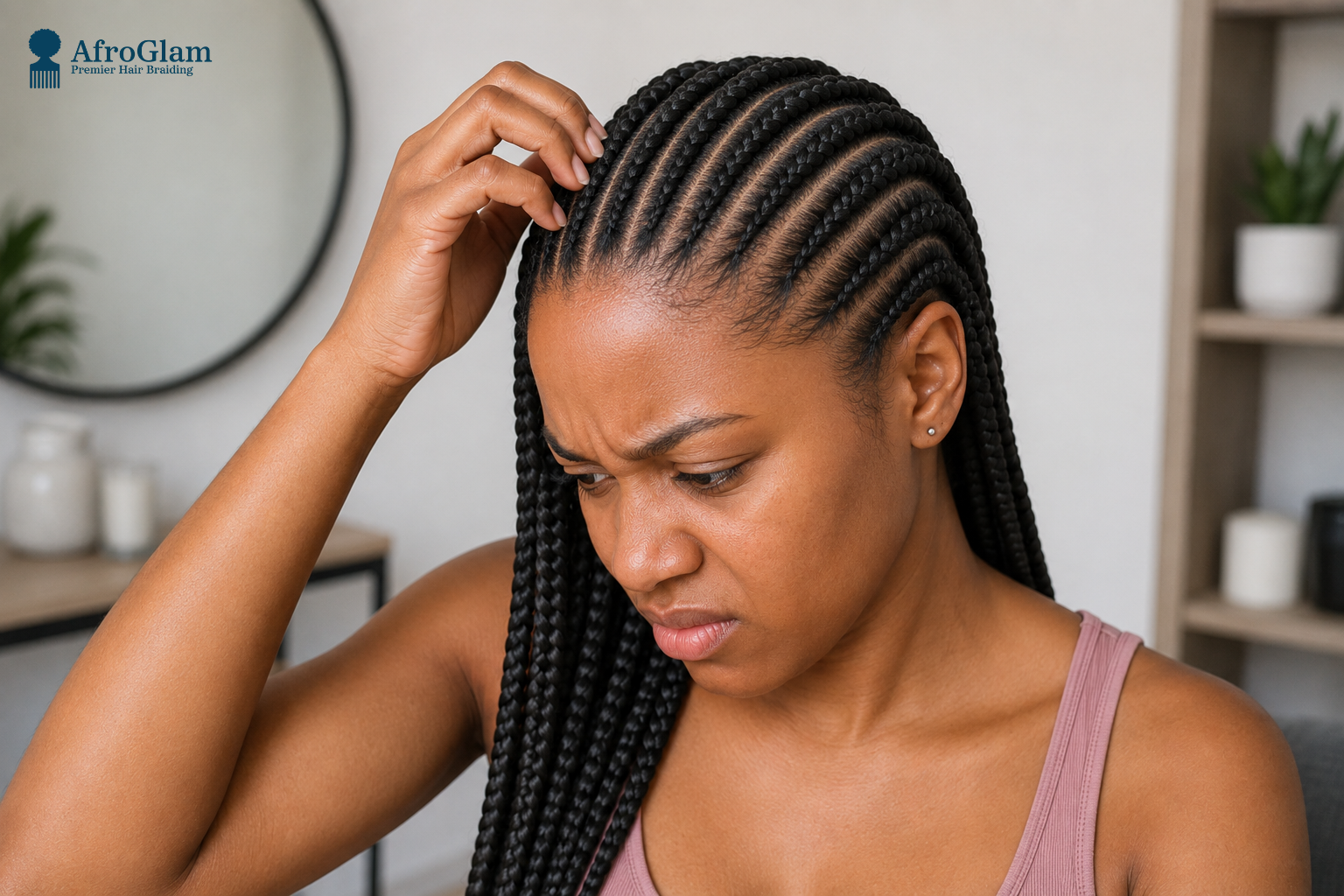
A little itching after braids is normal, especially in the first day or two. Your scalp is getting used to a new hairstyle, slight tension, and changes in airflow and moisture. Light itchiness that comes and goes might just mean your scalp is dry or reacting to the new style.
But if you're dealing with constant itching, burning, redness, swelling, bumps, or tenderness, pay attention. These can signal irritation from the hair, too much tension, or even an allergic reaction. If it gets more intense when you touch the roots or move your head, the issue might be more than just dryness.
Why the Scalp Reacts Quickly
Your scalp is sensitive because it has lots of nerve endings and hair follicles close together. When braids pull too hard, residue sits on the scalp, or a coating on synthetic hair causes irritation, your body responds with inflammation. That inflammation can feel like itching before it becomes painful.
An itchy scalp can be an early warning sign, not just an annoyance. Paying attention to the type of itch, where it appears, and how long it lasts can help you fix the problem sooner. This is especially important if you regularly wear protective hairstyles like cornrows or regular twists.
Common Causes of Itching After Braiding
Synthetic Hair Irritation and Chemical Coatings
One big reason for irritation is synthetic braiding hair. Many braiding extensions are coated with alkaline substances to reduce mold risk and improve texture. These coatings can trigger itching and discomfort for sensitive scalps.
People often blame the braid style, but the extension hair might be the real issue. Some stylists recommend pre-washing or soaking the hair before installation to reduce surface residues and make the hair feel softer. This is a smart move before styles like boho braids or gypsy braids, where extension hair is worn close to the scalp for weeks.
Product Buildup, Sweat, and Natural Oils
Another common cause of itching is buildup on the scalp. Styling creams, gels, edge control, leave-in products, and oils can mix with sweat and natural sebum, creating residue that clogs pores. When the scalp can't breathe, it might become itchy, flaky, or inflamed.
This is especially common in warm or humid climates and after workouts. Many people apply extra products to keep braids looking fresh, but too much product can actually irritate the scalp more. Sometimes, buildup is mistaken for dryness, so people keep adding more oil when they really need a gentle cleanse. For a detailed routine, check out Essential Scalp Care for Protective Styles.
Tight Braiding and Scalp Tension
Tight braids can cause immediate itching because tension pulls on the hair follicles and surrounding skin. That tension might reduce comfort, but it can also lead to inflammation and, over time, traction-related damage. Even if the style looks neat, too much pulling is a problem that should be corrected early.
Hair health professionals warn that repeated high-tension styles might contribute to traction alopecia. The National Center for Biotechnology Information explains how prolonged traction can damage follicles and affect hair growth. If your scalp feels sore at the hairline or behind the ears, it might be time to loosen the style or discuss a safer installation method.
Dry Scalp and Environmental Stress
Dryness can also make the scalp itchy after braids, especially if your scalp loses moisture quickly. Braids can make it harder to distribute natural oils from root to tip, leaving the scalp feeling tight or itchy. Cold air, indoor heating, frequent shampooing, and harsh products can make dryness worse.
On the other hand, over-oiling can create buildup, so balance matters. The goal is not to smother the scalp but to hydrate it lightly and consistently. If your hair is prone to dryness, styles like kinky twists or crochet braids may still work well, as long as your maintenance routine supports scalp moisture without clogging the roots.
How to Tell the Difference Between a Mild Itch and a Real Problem
Signs of Routine Braid Itch
Mild braid itch often shows up as occasional irritation rather than constant discomfort. It might improve after lightly misting the scalp, adjusting your routine, or letting your hair settle for a day or two. The scalp might feel slightly dry, but it shouldn't be painfully tender or visibly inflamed.
If the itch is manageable and there are no open sores, significant bumps, or severe redness, it might be related to dryness or new-style adjustment. In these cases, simple care steps usually help. A gentle routine that includes light hydration and careful cleansing can prevent the problem from escalating.
Signs You Should Take Seriously
If your scalp burns, throbs, swells, or develops painful bumps, you might be dealing with a more serious reaction. The same is true if itching is concentrated in one area where braids are especially tight. Discomfort along the edges, crown, or nape should be closely monitored because those are common stress points.
Persistent scratching can also create microtears in the skin, which raises the risk of infection and makes irritation worse. If you notice a rash, pus, or hair loss around the braid base, remove the style or seek professional help promptly. For more on tension and discomfort, our article on why tight braids hurt explains how tension affects both comfort and long-term hair health.
Best Ways to Relieve an Itchy Scalp Under Braids
Use a Cooling Scalp Spray
A cooling scalp spray with ingredients like peppermint or tea tree oil can offer fast relief, especially when the itch is caused by irritation or mild inflammation. These ingredients are popular because they create a refreshing sensation and may help the scalp feel calmer. Still, they should be used carefully and in moderation, especially on sensitive skin.
Always patch test new products before applying them widely. If your scalp reacts badly to strong essential oils, choose a fragrance-light formula or a soothing mist designed for protective styles. A cooling spray is a helpful tool, but it should support a healthy routine rather than replace one.
Apply Lightweight Oils the Right Way
Lightweight oils such as jojoba oil or coconut oil can help reduce dryness, but the key is using them sparingly. A few drops applied directly to the scalp are often enough. Heavy application can weigh down the braids and contribute to buildup, which may lead to even more itching.
Many stylists recommend focusing on hydration rather than greasing the scalp. If you want to keep the style fresh longer, think in terms of scalp nourishment, not saturation. Pairing light oil with regular cleansing is often more effective than constantly adding more product. You can also ask about a professional hair wash before or after braid installation to start with a cleaner base.
Clean the Scalp Gently Without Disturbing the Braids
Gentle cleansing is one of the most important ways to relieve an itchy scalp. Instead of rough scrubbing, use a no-rinse cleanser, diluted scalp solution, or a soft cloth dampened with water to remove residue around the part lines. This approach helps you clean the scalp while preserving the structure of the braids.
The NHS notes that scalp flaking and itch can be made worse by irritation and product buildup, which is why a careful cleansing routine matters. If your braids are heavy with oils, sweat, or styling residue, a light cleanse may provide more relief than adding another product on top.
Avoid Scratching and Use Tapping Instead
It can be tempting to scratch an itchy scalp, but scratching usually makes the problem worse. It can worsen irritation, loosen the braids, and even damage the hair shaft near the root. Over time, repeated scratching may cause breakage or small injuries to the scalp.
A better approach is to gently tap the itchy spot, press lightly with clean fingertips, or use a cool compress for short periods. This reduces the urge to scratch while giving the scalp a chance to settle. If the itch is constant, address the cause rather than trying to overpower the sensation.
How to Prevent Itchy Braids Before They Start
Pre-Wash Extensions Before Installation
One of the simplest prevention strategies is to pre-wash or soak extension hair before it's braided in. A warm-water shampoo rinse can help remove surface chemicals, dust, and manufacturing residue. Some stylists also use a water and apple cider vinegar soak to reduce potential irritants, though the method should be handled carefully to avoid leaving a strong odor or residue.
This extra step can make a meaningful difference, especially for people with sensitive skin. If you're scheduling a new style like cornrows, boho, or an extended ponytail, ask your stylist whether extension prep is included or recommended. Small preparation steps often lead to a much more comfortable wear experience.
Choose the Right Braiding Technique and Tension
Not all braid styles place the same amount of stress on the scalp. Knotless styles are often preferred by clients who want a more natural feel because they usually reduce the sudden tug of a knot at the root. Softer tension and cleaner parting can go a long way toward preventing itch and soreness.
If you have a tender scalp, talk to your stylist before installation. Mention your comfort level, previous braid experiences, and any history of irritation. If needed, a more comfortable style, such as knotless braids, can be a better fit than a high-tension approach, especially if you want to protect your hairline.
Keep Your Braid Maintenance Routine Simple
A lot of itching problems come from overcomplicated maintenance. Too many oils, too much edge control, or frequent heavy reapplication of products can create buildup. A simple routine that focuses on cleanliness, light hydration, and scalp monitoring is usually better than using multiple products every day.
Many hair professionals recommend setting a schedule rather than reacting to every itch with more product. That can mean cleaning the scalp once or twice a week, refreshing with a light spray, and avoiding buildup at the roots. If your style needs a refresh, a service like touch-up braids may be more effective than trying to fix everything yourself at home.
Real-World Examples and What They Teach
When Pre-Washing Made the Difference
Many clients report that pre-washing extension hair significantly reduces itching within the first few days of wear. In those cases, the scalp may still adjust to the style, but the severe redness and stinging never develop. The difference is especially noticeable for people who have had reactions to braiding hair in the past.
That experience supports what stylists have observed for years: preparation matters. A little extra time before installation can prevent days of discomfort later. It also gives clients more confidence that their style will be both beautiful and wearable.
When Tightness Turned Into a Maintenance Problem
Another common pattern is discomfort caused by braids installed too tightly at the start. Clients often try to “wait it out,” but the tension can cause headaches, swelling, and edge stress. Instead of improving over time, the style becomes harder to maintain because the scalp is already inflamed.
These cases show why communication is so important during the appointment. If braids feel too tight from day one, they probably are. Comfortable styling should not require enduring pain. A professional salon experience should leave you looking polished, not dealing with unnecessary soreness.
When a Simple Cleanse Restored Comfort
Some people assume they need to remove their braids when itching starts, but sometimes the real fix is a thorough scalp cleanse. After sweat, leave-in products, and oils build up, a gentle wash or residue-removal routine can calm the scalp and restore comfort. This is especially helpful if the issue began after workouts or repeated product use.
If you're unsure whether your issue is buildup or irritation, start with the least aggressive solution first. Cleanse gently, hydrate lightly, and observe how your scalp responds over the next day or two. If the symptoms persist, seek a professional assessment rather than continuing to experiment on your own.
Why Scalp Care Matters for Protective Styles
Protective Styles Still Need Scalp Attention
Protective styles are meant to support hair health, but they only work well when the scalp stays clean, comfortable, and properly hydrated. Braids can protect the ends of your hair and reduce daily manipulation, yet the scalp still needs regular care. Ignoring itching can turn a protective style into a stressful one.
This is why professional services that focus on comfort and maintenance are valuable. Options like cornrows for a wig and sew-ins may also require thoughtful scalp prep, because the foundation matters just as much as the finished look. A healthy scalp creates the best environment for lasting style wear.
Houston Climate and Daily Wear Considerations
Warm, humid weather can make scalp care even more important because sweat and moisture can contribute to buildup and itching. That means people wearing braids in Houston may need to cleanse and refresh more intentionally than those in cooler climates. Local conditions can influence how often you need to moisturize and how quickly your scalp gets irritated.
If you live locally and want personalized support, a trusted braiding salon and beauty salon can help you choose a style that fits both your hair and your routine. For clients in need of protective style maintenance or comfortable installation, AfroGlam Hair Braiding serves families looking for expert care, including styles for adults and children, such as kids box braids and kids cornrows braids.
When to Seek Professional Help
Persistent Itching, Bumps, or Hair Loss
If itching lasts more than a few days, keeps getting worse, or is paired with bumps or shedding, it's wise to get help. These signs can indicate a reaction to hair products, an infection, or traction-related stress. The earlier you respond, the easier it is to prevent more serious issues.
A professional stylist can assess braid tension, product choices, and whether the style needs to be loosened or removed. In some cases, a new installation method or a safer style adjustment is the best solution. Paying attention early helps protect your scalp and your hairline.
What a Salon Can Do Differently
An experienced salon can help by pre-washing extensions, choosing low-tension methods, and recommending products that work for your scalp type. A skilled stylist can also explain how to maintain the style without triggering more buildup. When braids are installed correctly, they should support your lifestyle rather than interfere with it.
For clients who want more than a quick style, a salon conversation can clarify what caused the itch in the first place. That may include switching braid sizes, changing hair brands, or adjusting how much product is used during and after installation. If you're planning your next appointment, reviewing how to prepare hair before a braiding appointment can also help you start from a healthier baseline.
Frequently Asked Questions About Itchy Braids
How Long Should the Itch Last?
Mild itchiness may last a day or two as your scalp adjusts, but it shouldn't be severe or constant. If the discomfort continues beyond the first few days, look for signs of buildup, dryness, or tension. It's always better to address the cause early than to keep waiting.
Can I Use Oils Every Day?
You can, but daily oiling isn't always helpful. A small amount may soothe dryness, yet too much oil can trap debris and worsen itching. Most people do better with a light, targeted application instead of full scalp saturation.
Should I Wash Braids If They Itch?
Yes, if buildup is the cause, a gentle cleanse can help. Use a method that doesn't disturb the braids too much, and avoid rough scrubbing. If you're unsure how to do it safely, ask your stylist for a maintenance plan or book a professional refresh.
Do Synthetic Extensions Always Cause Itching?
No, but some people are more sensitive than others. The itch may come from coatings, texture, or residue rather than the synthetic fiber itself. Pre-washing extensions is one of the easiest ways to reduce that risk.
Final Thoughts: Listen to Your Scalp
An itchy scalp after braids is usually a signal, not something to ignore. It may point to product buildup, dryness, irritation from synthetic hair, or braids that are too tight. Once you know the cause, you can usually solve the problem with small, practical changes that make a big difference.
If you want comfortable, stylish braids that support scalp health, choose thoughtful installation, keep your maintenance routine simple, and address discomfort early. For help with your next protective style, maintenance service, or scalp-friendly braid plan, contact AfroGlam Hair Braiding at (346) 430-9350 or visit 12222 Bissonnet St, Suite L, Houston, TX 77099. You can also explore our services and book a style that fits your comfort goals, from box braids to hair extensions take down.
Ready for a more comfortable braid experience? Plan your next appointment with a salon that understands both style and scalp care, and enjoy protective braids without the unnecessary itch.